How to Optimize Your Website for Google AI Overviews…
Google AI Overviews in 2026 If customers are asking Google detailed questions before choosing a service or…
Build clearer topic relationships, stronger entity signals and search-focused content architecture through a tailored semantic SEO audit, strategy and implementation roadmap.
Discover missed topical opportunities, unclear entity relationships and content gaps that may be limiting your organic search performance.
Semantic SEO helps search engines and users understand what your website covers, how its topics connect and why its pages are relevant to specific searches. My Semantic SEO Services combine search intent research, entity optimization, topical mapping, content architecture and strategic internal linking to build a clearer foundation for organic search visibility.
As a Semantic SEO Consultant, I help local businesses, ecommerce brands and service-based websites move beyond isolated keyword targeting. Rather than creating disconnected pages around similar phrases, I organize important topics, products, services and supporting information into a logical structure that connects customer questions with business goals.

Entity SEO focuses on making the people, brands, products, services and concepts discussed on your website easier to identify and distinguish. I review how these entities are described across your pages, structured data, internal links and relevant business profiles to improve consistency and reduce ambiguity.
For example, an ecommerce website may have valuable product pages but weak connections between product categories, attributes, comparisons and buying guides. A local service business may describe the same service differently across its homepage, service pages and business profiles. Semantic and entity-focused optimization helps create a more coherent information structure around these relationships.


My approach also includes competitor content gap analysis, keyword cannibalization reviews, content consolidation and relevant schema markup. The goal is to make important pages more useful, connect supporting topics with commercial landing pages and help search engines interpret your website in its proper context.
Semantic SEO is not a shortcut to guaranteed rankings or a Google Knowledge Panel. It is a structured method for improving content relevance, technical clarity and user experience while measuring the impact on qualified organic traffic and business enquiries.
I review your website's topic coverage, search intent alignment, page structure and internal linking to identify missing content, overlapping pages and weak semantic connections. The audit prioritizes opportunities based on business value, relevance and implementation effort.
I create a topical map that connects your core services or products with relevant supporting questions, subtopics and customer research needs. Each planned page has a clear purpose, search intent and relationship to the wider website.
I identify important business, service, product and expert entities, then review how consistently they are represented across your website and relevant external sources. The work improves entity clarity and supports accurate brand identification without promising Knowledge Panel inclusion.
I group related search queries by meaning, user intent and the information customers need. This helps map keywords to suitable pages, avoid unnecessary duplication and connect informational research with relevant commercial services.
I improve important pages through clearer explanations, relevant entity attributes, meaningful headings, supporting examples and useful comparisons. The goal is comprehensive, readable content that satisfies the searcher's needs without keyword stuffing.
I organize pillar pages, service pages and supporting resources into a logical site structure. Contextual internal links help visitors discover related information and allow search engines to find and understand connections between important pages.
I review applicable Schema.org markup for your business, services, content and relevant entities. The focus is on accurate, consistent structured data that reflects visible page information and connects related entities through appropriate identifiers.
I evaluate relevant search queries, organic landing pages, indexing, internal-link improvements and business conversions using available analytics. These findings help refine topical priorities, improve underperforming content and focus future work on measurable opportunities.







A structured roadmap connecting topical research, entity mapping, search intent, content architecture, internal linking and measurable organic growth opportunities.
My Semantic SEO process starts by understanding your business model, target customers, primary services and organic search goals. I analyze your existing pages, relevant search queries, competitor content and topical relationships to identify where your website needs greater clarity, stronger coverage or better content organization.
Next, I define the central topics and entities that matter to your business. These findings inform a practical content architecture with clearly assigned page purposes, search intent groups, supporting topics and contextual internal links. This approach helps reduce duplicate targeting while keeping the website focused on commercially relevant searches.
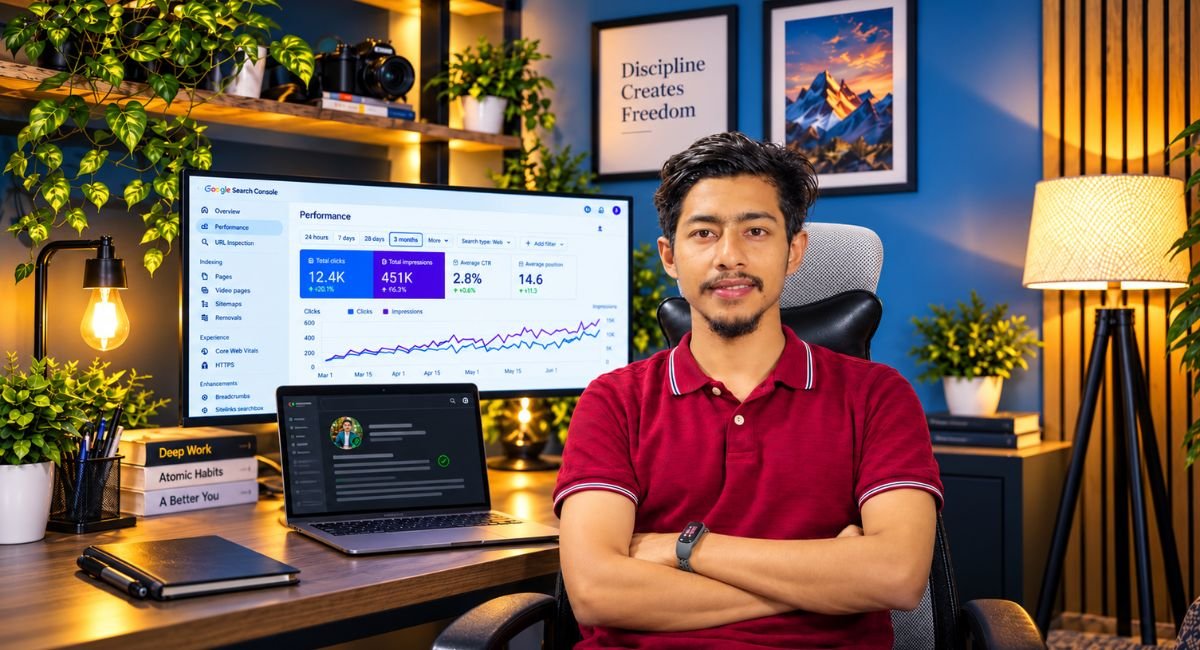

Implementation may include optimizing existing service pages, consolidating overlapping content, developing missing supporting resources, clarifying entity descriptions and improving structured data. I prioritize meaningful changes before recommending new content, so your website grows through better information quality rather than unnecessary page volume.
Finally, I review Google Search Console, organic landing-page performance and conversion data to evaluate progress. The strategy is adjusted as search demand, content performance and business priorities evolve.
A structured review of topical coverage, search intent alignment, page overlap, content quality and internal linking. The report identifies priority issues and practical recommendations for improving semantic relevance.
A topic and page-planning framework that connects core commercial pages with relevant supporting content. The plan defines page purpose, content priorities and relationships across your website.
A review of relevant business, service, product and author entities, including opportunities to improve consistency, entity relationships and applicable schema markup.
Page-level recommendations covering semantic headings, entity attributes, missing information, consolidation opportunities and contextual internal links that connect related content.
A prioritized action plan with implementation guidance and measurable indicators such as relevant queries, organic landing-page traffic, indexing improvements and conversions. Deliverables are finalized according to the agreed project scope.
Not sure why customers cannot find clear answers about your services? Let’s review your content, search visibility and AEO opportunities.
Semantic SEO is an approach to search engine optimization that focuses on topics, entities, context and search intent rather than relying only on exact-match keywords. It helps organize website content around meaningful relationships so users can find complete, relevant information and search engines can interpret pages more clearly.
Entity SEO focuses on clearly identifying the people, brands, products, services, places and concepts discussed on a website. It improves the consistency of entity descriptions, contextual relationships, relevant references and structured data. The goal is to reduce ambiguity and create a more coherent online representation of a business.
Keyword-focused SEO often begins with individual search terms and their target pages. Semantic SEO expands that approach by examining what users mean, which entities are involved, how questions relate to one another and which information belongs together. Both methods can work together within an effective organic search strategy.
A topical map is a structured plan showing the important topics, subtopics, questions and relationships a website should cover. It helps determine which subjects deserve dedicated pages, where supporting information belongs and how content should connect through internal links. A useful topical map is shaped by business relevance and user needs, not just article quantity.
A Semantic SEO consultant reviews search intent, topical coverage, entity clarity, content architecture and internal linking. The consultant identifies content gaps, overlapping pages and opportunities to improve important landing pages. Depending on the engagement, the work may include topical mapping, content briefs, schema recommendations and performance analysis.
Yes. Local businesses can use semantic content structures to explain services, customer needs and relevant locations more clearly. Ecommerce websites can connect product categories, attributes, comparisons and buying guides. The most effective strategy depends on the business model, search competition and customer journey.
No. Entity SEO can improve the consistency and clarity of information associated with a brand, but Google determines whether a Knowledge Panel appears. Accurate structured data, trustworthy references and consistent business information can support entity understanding without guaranteeing a specific search feature.
Semantic SEO can provide a clearer foundation for AEO and GEO by improving content relationships, entity descriptions, search intent coverage and technical accessibility. Answer Engine Optimization emphasizes useful answers to questions, while Generative Engine Optimization examines discoverability and representation in generative search experiences. None of these approaches guarantees AI citations.
Results vary depending on website condition, competition, indexing, existing content and the changes implemented. Some technical or content improvements can be evaluated shortly after search engines process them, while broader organic growth may take longer. Progress should be reviewed through relevant queries, landing-page performance and conversions.
Semantic SEO pricing depends on website size, content complexity, existing technical issues and the scope of research or implementation required. A focused semantic SEO audit generally involves less work than a full topical map, content restructuring and ongoing optimization project. A tailored assessment helps establish appropriate deliverables and pricing.
Explore practical guides on Semantic SEO, Entity SEO, topical maps, search intent, knowledge graphs, structured data and content architecture to build a stronger organic search foundation.
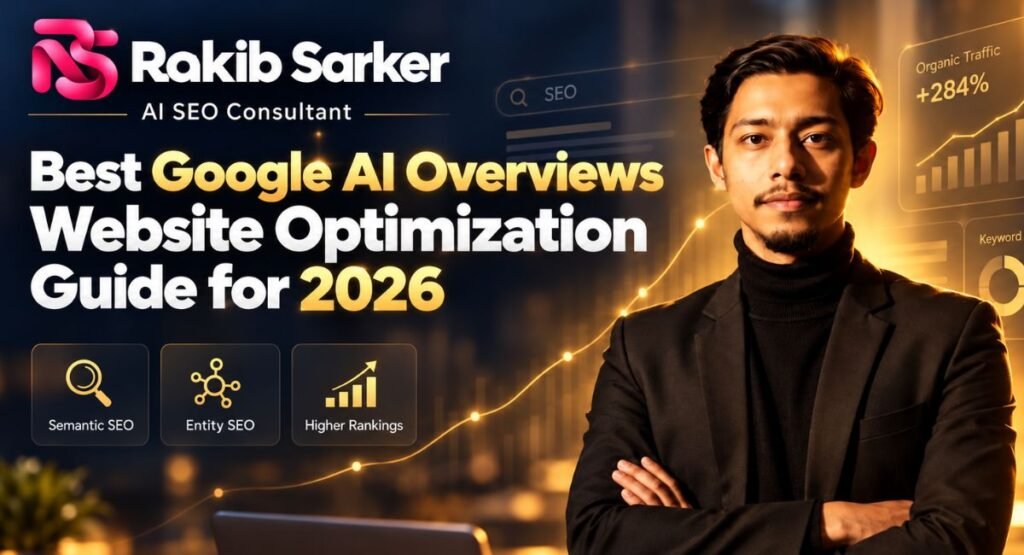
Google AI Overviews in 2026 If customers are asking Google detailed questions before choosing a service or…
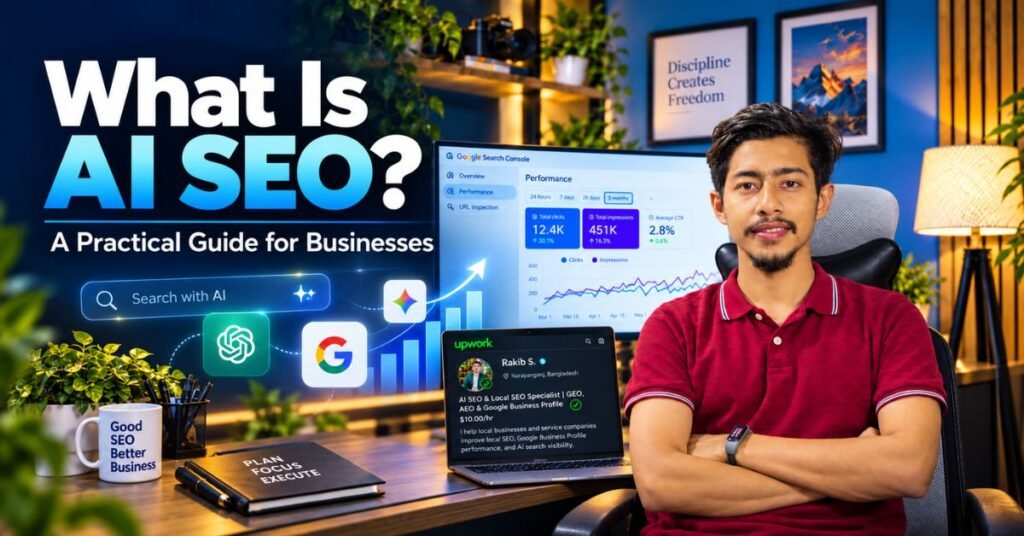
If you are asking what is AI SEO, it means improving discovery across traditional and AI-assisted search.…
Every Semantic SEO project starts with understanding your business, customers and the information they need before making a decision. I develop tailored strategies that connect entity research, topical authority planning, semantic content optimization and technical SEO with your commercial goals.
My approach prioritizes relevant improvements over unnecessary content production. From resolving overlapping pages to improving internal linking and entity clarity, I focus on practical changes that make your website easier to navigate, understand and evaluate. Research findings, implementation priorities and measurable outcomes guide the work throughout the engagement.
127+ Review
Review 4.9/5.0
Rakib helped us build a much clearer Local SEO strategy by connecting our website, Google Business Profile and local search opportunities. His recommendations were practical, well structured and focused on sustainable organic growth.
Turn scattered pages and disconnected topics into a more coherent website experience. I help identify which information belongs together, where important connections are missing and how your content can better support customer research and business decisions.
+880 1580 686078
Contact@rakibsarker.com
Let's Connected
Worldwide SEO Consulting Remote Support for Global Businesses
Is your website struggling with disconnected content, overlapping keywords or limited organic growth? My Semantic SEO and Entity SEO services help identify opportunities to improve topical relevance, entity clarity, content architecture and search intent alignment.
Share your website and business goals to explore a tailored Semantic SEO audit and practical optimization strategy focused on relevant organic visibility, qualified traffic and potential leads.
Rakib Sarker is an AI SEO Consultant and Local SEO Specialist helping local businesses and ecommerce brands improve visibility across Google Search, Google Maps and AI-assisted search.
Get practical insights on AI SEO, Local SEO, Google Business Profile, ecommerce SEO and modern search growth.
Copyright © 2026 Rakib Sarker. AI SEO Consultant & Local SEO Specialist.